

IJAS Special Issue: New work in 19th-Century Historical and Literary studies
In her short life, Phillis Wheatley Peters (1753-1784) made three incredible seafaring voyages. The first was her transportation from West Africa to Boston on the brig The Phillis, in 1761, as an enslaved child to be sold at auction. The second was her Atlantic crossing on the London Packet in May 1773, when she travelled to London to promote her book, Poems on Various Subjects, Religious and Moral (1773), and her return from London to Boston was her third crossing.[1] These nautical journeys were so contrasting in their treatment of the author of Poems as to be barely believable: the child who had survived the hold of the Middle Passage would cross the Atlantic again, just twelve years later, to promote her own poetry and launch a literary career in London. Before the volume’s publication, her poem ‘On Recollection’ had been published in both the London Magazine in 1772 and The Gentleman’s Magazine in 1773, and ‘Hymn to the Morning’ appeared in the London Magazine a year later. This came from a determined effort to promote her poems in England, and her second crossing was an effort to close the deal, as it were, to ensure that the full collection would be published.
The journey was successful, for Archibald Bell, the small London press, printed the first edition of Poems in September 1773, when no publisher in colonial America would accept the proposal. Given that it resulted in the only collection of Wheatley Peters’s poetry that has survived, that second crossing has received a great deal of critical attention, and rightly so.[2] It was the making of Poems and positioned the author as the foremother of African-American writing, the first Black poet to publish a book of poems in English.[3]
However, this attention on the journey of 1773 has overshadowed her first transatlantic crossing. She sailed to North America in 1761 on The Phillis, the ship for which she was renamed. Her African name is now lost to history, and she wrote most of her poetry under the composite name taken from the slave ship and from her ‘owner’, John Wheatley, with some important exceptions. For example, after her marriage to John Peters, a proposal for the (now lost) second collection of poetry was signed ‘Phillis Peters, formerly Phillis Wheatley’.[4] And, following her marriage in 1778, she signed not only the proposal for the second collection, but also a letter and a poem using her married name. The letter was to her lifelong friend Obour Tanner (1779) and the poem, ‘An Elegy, Sacred to the Memory of the Great Divine, the Reverend and learned Dr. Samuel Cooper’ (1784), was signed ‘Humble Servant, Phillis Peters’.[5] Although critical approaches to her work refer to her by the surnames Wheatley, Peters, Wheatley (Peters) and Wheatley Peters, she has since 1761 been consistently known as Phillis, the given name that ties the first voyage to her formation as a poet, to her authorship and to her transatlantic fame.
I will argue here that traces of that first treacherous Atlantic crossing on The Phillis can be detected in Poems. And yet, Wheatley Peters’s reflections on that journey rarely emerge in critical responses to the collection. Instead, until now, scholarship has considered Poems to be concerned primarily with ideas about religiosity, cosmology, classical mythology, politics, revolution, and race, but not with the Middle Passage in any sustained way. This critical omission may be accounted for by the fact that her most famous poem, ‘On Being Brought from Africa to America’, a title which alludes to that crossing, detours away from any reference to the voyage from West Africa to Boston, focussing instead on the complications of racial identity, colourism, and the possibility of, and the possibilities within, Christian salvation. Perhaps critics, noticing that the journey from Africa to America was missing in a poem specifically titled for that journey, decided that such an omission must apply to the entire collection.[6]
Christina Sharpe’s scholarship on the legacies of slavery, and particularly the Middle Passage, theorizes the ‘continued existence’ of the ‘slave ship and the hold’ in what she calls the ‘black everyday’.[7] Sharpe’s point is that the historical trauma of the Middle Passage resurfaces and is always present. Contemporary writing of the Black Atlantic certainly testifies to such Freudian returns.[8] And yet, Wheatley Peters, one of only three poets known to have undergone the Middle Passage, has had very little critical attention devoted to an exploration of that transformative voyage in her work. There is a surprising paucity of attention to understanding whether and how this most significant of events is represented in Poems.[9]
The omission is an extraordinary one, and it dehistoricizes both the poet and her work. Whereas other nineteenth and twentieth-century poets that address the Middle Passage engage with it historically, imagining the experience from the perspective of an earlier generation, Wheatley Peters could directly attest to the horrors of the hold.[10] This article turns to the poetry and to the now familiar publishing history initiated by her journey on the London Packet. Using ‘Ode to Neptune’ (1772), a poem full of violent imagery depicting the brutality of stormy seas, I argue that in Poems Wheatley Peters offers an account of the Middle Passage from her own experiences of the hold of her namesake The Phillis.
The Evangelical Atlantic and the Critical Dismissal of Poems
The transatlantic effort to find a publisher for Poems seems to have been an all-female endeavour orchestrated by three women: the poet herself, her mistress Susanna Wheatley, and Selina Hastings, Countess of Huntingdon, founder of the evangelical Huntingdon Connexion (1783), which seceded from the Church of England as part of the wider Evangelical Revival lead by George Whitefield. A network of missionary chapels appeared, funded by Hastings, across England, and Wales and which expanded into Sierra Leone. Whitefield was Hastings’s personal pastor and upon his death in 1770 she inherited the Bethesda Orphan House and Academy he had founded in Maryland in 1740. The bequest included 49 enslaved people.
A letter from Susanna Wheatley to Hastings, composed as they prepared for the poet’s journey to London, sheds light on how Wheatley Peters’s status remained caught in a space between her two barely compatible existences, that of enslaved person and published poet, each compellingly symbolised by her two Atlantic crossings. The letter reads:
Phillis being in a poor state of Health, the Physicians advise to the Sea air and as my son is coming to England upon some Business and as so good an opportunity presented I tho’t it my duty to send her & as your Ladiship has condesended to take so much notice of my Dear Phillis as to permit her Book to Dedicate to you, and desiring her Picture in the Frontispiece: I flatter’d my Self that your good advice and counsel will not be wanting. I tell Phillis to act wholly under the direction of your Ladiship. I did not think it worth while nor did the time permit to fit her out with cloaths: but I have given her money to Buy what you think most proper for her, I like she should be dress’d plain.[11]
There is much that is coded in this letter. Despite the fact that her ‘ladiship’, Hastings, had already agreed to have her name in the book’s dedication and had commissioned the poet’s ‘Picture in the Frontispiece’, Susanna Wheatley opens with the pretence that, given the asthmatic Wheatley Peters’s poor health, the journey is prompted by concerns for her health, and she will accompany Nathaniel Wheatley on his business trip. But the mentions of the book, the frontispiece portrait, and the clothes the poet is to be fitted for on arrival speak to the real purpose of the journey, which was to promote her poems to influential people in London. Nathaniel’s business was most likely the support of the publishing enterprise. For all that, the ambiguity around the purpose of the voyage and the fact that the poet should be dressed ‘plain’ underline that, despite her burgeoning literary reputation and regardless of the attention she was about to receive in the literary scene of London and beyond upon disembarking the London Packet, she remained the enslaved person who had arrived on The Phillis, twelve years before, to be sold at auction in Massachusetts.
At the ‘desire of [her] friends in England’, Wheatley Peters was manumitted by the Wheatleys on her return to Boston.[12] Those friends included Hastings, who not only complied with Susanna Wheatley’s requests to act as the poet’s ‘guardian’ but went on to support the publication of Poems financially. As Eric D. Lamore has argued, Wheatley Peters would have had great difficulty in finding a publisher for her book of poems if Hastings had not supported the collection: her initial 1772 proposal for the collection was ‘rejected by a racist colonial community’ and she ‘would have continued to struggle in locating a press that would print her poems’ if Hastings had not intervened. [13]
As such, Poems, and the poet’s manumission, are strongly connected to Hastings, a woman for whom no tension existed between owning enslaved people and supporting Black writing, especially when that writing promised in its subtitle to be, ‘Religious and Moral’, thus furthering her commitment to the transatlantic evangelical cause. Although Wheatley Peters’s first published poem was ‘On Messrs. Hussey and Coffin’ (1767), the poem that made her mark and brought her widespread acclaim on both sides of the Atlantic was her elegy for George Whitefield (1770). She seems to have written the poem to garner Hastings’s attention and favour, sending a copy of the poem to the countess in 1770. The effect was profound, leading not only to the eventual publication of the collection and the famous frontispiece but also to pulling the poet out from her Boston milieu and into Hastings’s world of influential people. The support of the English aristocratic sponsor strengthened Wheatley’s reputation as a poet and introduced her to British and American dignitaries. Benjamin Franklin, for example, was a staunch admirer of Whitefield, and one of the many public figures to meet with Wheatley Peters on her London trip.
In the process, however, that connection to Hastings inflected the reception of Wheatley Peters’s poetry, allowing the publication to be understood as what Leon Jackson has called, ‘a white venture’.[14] The association of Poems with the white evangelical Atlantic of Hastings and Whitefield, and with English aristocracy shaped how the collection was read for centuries after its publication. The support from English aristocracy may also have bolstered the contemporary American response to the collection: Thomas Jefferson had dismissed it as mere mimicry, offering nothing in the way of original poetry. His disparaging remark reads:
Misery is often the parent of the most affecting touches in poetry. Among the blacks is misery enough, God knows, but no poetry. . . . Religion, indeed, has produced a Phillis Whately [sic]; but it could not produce a poet. The compositions published under her name are below the dignity of criticism.[15]
This destructive claim – that the compositions were imitations of the work of John Dryden, Alexander Pope, and John Milton, offering nothing meaningful of their own – cast a long shadow over Poems. As Henry Louis Gates notes, ‘Phillis Wheatley has for far too long suffered from the spurious attacks of black and white critics alike for being the original ram avis of a school of so-called mockingbird poets’.[16] The critical rejection of her originality stemmed from Jefferson’s attack, which was based solely on Wheatley Peters’s adoption of received European poetic conventions.
In the twentieth century, the critical concern that Poems had been a ‘white venture’ because of its association with Hastings and Whitefield enabled further refusal and scholars only began to take Poems seriously, or as worthy of close critical attention at all, in the late 1990s. Even then the poetry itself tended to be obscured by the question of whether or not its author’s voice was a legitimate representative of Black writing. There are several important exceptions to this critical pattern, with June Jordan’s creative/critical intervention in the 1980s, and the launch of the ‘Phillis Wheatley Festival’ in 1973 providing good examples of how Black feminist writers and critics sought fuller assessments of Poems.[17] Significantly too there was considerable interest in Poems from the abolitionist Black press of the nineteenth century, which I will turn to below. If eighteenth-century responses dismissed the collection for being ‘too Black’, by the twentieth century, the collection was being rejected on the basis that neo-classical copying made the poems and the poet ‘too white’. Poems was condemned as the product of the white evangelical Atlantic, written by a poet who was a mere ventriloquist’s dummy for white superiority.[18] Accusations of white impersonation included Amiri Baraka’s claim that Wheatley Peters’s ‘pleasant imitations of 18th century English poetry [were] far and, finally, ludicrous departures from the huge black voices that splintered Southern nights with their hollers, chants, arwhoolies, and ballits’ and Eleanor Smith argued in 1974 that she was completely controlled by the Wheatley family (‘taught by Whites to think White’ and groomed early by the Wheatley family to ‘begin the white-washing at a tender age’).[19]
By the late 1990s and early 2000s, the work of Vincent Caretta, John Shields, and Betsy Erkkila approached Poems in more nuanced ways, arguing that the collection merited close reading and had artistic weight as a work of literature rather than because it represented Black intellectualism.[20] This critical turn was the beginning of a concerted effort to take Poems seriously and to recover Wheatley Peters from her association with white English aristocracy.
The Nineteenth Century and Poems in the Black Press
Despite the contemporary critical refusal of Poems in America, there was a moment in the nineteenth century when literary value was accorded the collection. Attention to the poet’s first Atlantic crossing on The Phillis helps to explain this nineteenth-century interest, because it focuses attention on what the collection is about. Joel Pace argues that positioning Wheatley Peters as a symbol of the beginnings of Black writing can allow meaning in the poems themselves to be sidelined. Importantly too, as Pace puts it, ‘black lines (of music, poetry, lyrics, art, and protest) matter’.[21] Certainly Poems is full of elegies and addresses to notable eighteenth-century figures written by someone who knew she had an elite white readership to please, but much of the collection is also concerned with Black life before 1773 and before the poet’s life in America. The interest in Poems shown by the nineteenth-century Black American press sheds much light on what this critical force in African-American letters believed to be at stake in Wheatley Peters’s poetry and how her work sat in relation to literary and political debates in the period. That is to say that, in the nineteenth century, in the Black press, her poetry seems to have been taken seriously for what it had to communicate about Black life in America.
Nineteenth-century readers of the Black press appear to have been entirely receptive to the collection and the editors re-published Wheatley Peters’s writing widely. For example, by the mid-nineteenth century, prominent abolitionist readers welcomed the book’s ideas about Black freedom, and it was admired and championed by William Lloyd Garrison, Elizabeth Margaret Chandler, Lydia Maria Child, David Walker, and James McCune Smith, and used as evidence for the abolitionist cause.[22] Toward the end of that century, in 1892, the African-American poet William H. A. Moore described Wheatley Peters as no less than the ‘only directing creative force’ in Black literature.[23] If this appears hyperbolic, it is worth recalling that mid-century editors of Black newspapers had played a role in establishing a new readership for Poems. Philip A. Bell’s The Coloured American (1837-41) and Frederick Douglass’s The North Star (1847– 51), later renamed Frederick Douglass’ Paper (1851–59), conscientiously reprinted her poetry, while Garrison’s The Liberator featured almost all of her Poems between 1831 and 1865.[24] From the selection of poems that he chose to print in his newspaper, it seems clear that Douglass was particularly attuned to the poems that spoke to Wheatley Peters’s earliest experiences in Africa and crossing from Africa to America.
For example, on 31 August 1855, Frederick Douglass’ Paper published three of Wheatley Peters’s poems, ‘Hymn to Humanity’, ‘On Being Brought from Africa to America’, and ‘Ode to Neptune’.[25] The co-editor of the newspaper, Julia Griffiths (1811–1895), had returned to London by this point, setting sail from New York on 18 June 1855, some three months before the poems appeared, so the editorial decision was Douglass’s.[26] He almost certainly printed them to highlight the history of Black creative and intellectual achievement. But the poems he chose to publish also speak clearly to the antislavery cause, with more directness and transparency than other poems in the volume. Douglass would have had no trouble finding subversive ideas about Black freedom in ‘On Being Brought from Africa to America’ and ‘Hymn to Humanity’. He was, after all, well-versed in a nineteenth-century Black need for masks, veils, and polyvocality, as W. E. B. Du Bois would later theorize at the turn of the century.[27] ‘On Being Brought from Africa to America’, her most well-known poem, contains the most famous lines voicing veiled sentiments: ‘Remember, Christians, Negroes, black as Cain, May be refined, and join th’ angelic train’.[28] Boldly stated, the sentiment proclaims an equal passage on a human train to a heavenly afterlife that knows no colour bar, embedded within a poem that appears, at first reading, to approve of a merciful fall at the hands of Christian captors: ‘Twas mercy brought me from my pagan land’.[29] ‘Hymn to Humanity’ was also an obvious choice for Douglass, as the poem in which Wheatley Peters announces herself as ‘Afric’s muse’ in a pronounced declaration of Black equality.[30] The third poem, ‘Ode to Neptune’, appears to be a more opaque choice on Douglass’s part, at a first reading at least. However, a closer look at the poem uncovers the violent imagery of the Middle Passage, references that would not have been lost on Douglass. In a fresh reading of ‘Ode to Neptune’ that follows here, I argue that the poem becomes a clear choice for Douglass’s antislavery newspaper.
‘Ode to Neptune’ and the Two Susanna(h)s
Until recently, critics (mis)understood ‘Ode to Neptune’ to represent a subservient prayer for the safe voyage of Wheatley Peters’s mistress, Susanna Wheatley, from Boston to England. However, David Waldstreicher has recently corrected that critical assumption, pointing out that: ‘Susanna Wheatley would not have even contemplated any six-week sea voyage at her age and state of health, [and] there is no record of her ever travelling to England.’[31] Waldstreicher argues instead that this poem is both about, and for, Susannah Kelly Wooldridge, the wife of Thomas Wooldridge the London merchant and (corrupt) Alderman on whose request Wheatley had written her famous poem ‘To the Earl of Dartmouth’.[32] Wooldridge visited the Wheatley home in Boston in October 1772 and, on hearing that one of the people they held enslaved was a poet, demanded that she prove her abilities by writing a poem on the spot, dedicated to Lord Dartmouth. This was to commemorate Dartmouth’s new role in government as Secretary of State for the Colonies and to enable Wooldridge to win the approval of Dartmouth through a poetic celebration.
In response, the poet did as she had been instructed, while managing to include in her reply those most powerful lines about her kidnapping. That poem, ‘To the Right Honourable William, Earl of Dartmouth’ is explicit in its dealings with her abduction as a child. The famous stanza reads:
Should you, my lord, while you peruse my song,
Wonder from whence my love of Freedom sprung,
Whence flow these wishes for the common good,
By feeling hearts alone best understood,
I, young in life, by seeming cruel fate
Was snatch’d from Afric’s fancy’d happy seat:
What pangs excruciating must molest,
What sorrows labour in my parent’s breast?
Steel’d was that soul and by no misery mov’d
That from a father seiz’d his babe belov’d:
Such, such my case. And can I then but pray
Others may never feel tyrannic sway?[33]
Her memory of this and of her parents’ imagined pain is so agonizing that she prays no one else ever again experiences ‘tyrannic sway’ or colonial oppression. She communicates directly to Wooldridge and to Dartmouth the unbearable reality of her removal from Africa and its consequences for her and her family. Wooldridge’s demand for a poem to ingratiate him to Dartmouth yielded Wheatley Peters’s most direct engagement with her early life and brutal abduction: whether he realized it or not, Wooldridge got more than he bargained for in the tributary poem, which speaks truth to power about the trafficking of people in the Atlantic world.[34]
The dedication of the later poem ‘Ode to Neptune’ indicates that it was written ‘On Mrs W–’s Voyage to England’, and it explains the addition of the ‘h’ to Susanna(h)’s name as it appears in the first stanza. There would be no reason for Wheatley Peters to misspell Susanna Wheatley’s name and she was in any case not making a transatlantic journey. The Wooldridge dedication also changes how this poem may be read in significant ways, as it draws to the foreground the imagery of the Middle Passage present in the poem.
On completion of the Dartmouth poem on Wooldridge’s request, she wrote a letter ‘To the Earl of Dartmouth’, which was to accompany the poem ‘To the Right Honourable William, Earl of Dartmouth’. She gave the letter and the poem to Wooldridge to deliver. The letter is dated 10 October 1772, the day of Wooldridge’s visit, and that is the same date noted on ‘Ode to Neptune’. [35] Wooldridge demanded the Dartmouth poem in order to serve his own interests but it seems he got a second poem, too, or at least Wheatley Peters appears to have composed a second poem that same day and dedicated it to Wooldridge’s wife. The poet was well used to addressing powerful men through her poetry, in order to intervene in political and social conversations in ways that gave space to a debate about enslavement that had nowhere else to exist. She recognised that Wooldridge’s demand was an opportunity to be heard, not only by Dartmouth, but also by Wooldridge himself. In this way ‘Ode to Neptune’ can be read as an accompaniment to the Dartmouth poem. Where the Dartmouth poem recalls her abduction from Africa ‘Ode to Neptune’ recounts the conditions of that journey.
One reason for the lack of critical attention to Wheatley Peters’s experiences of the hold is that no reliable record of her life is extant.[36] A closer look at ‘Ode to Neptune’ goes some way to correcting that absence and to move the chronological dial back to her first voyage. Freighted with the memory of her experience of the Middle Passage on board The Phillis, the poem opens with anxiety forged in the ‘raging tempests’ fuelled by the ‘tyrant’ Aeolus (‘AE’lus’), the ruler of winds.[37] The wind is ‘The Pow’r’ that can damage the ship or allow for safe passage by billowing sails, and the speaker is fretfully concerned about which way it will blow. Given how it ‘thunders round’, it appears to be a destructive wind that will devastate all in its path.
In the second stanza, there is a change in tone: the speaker, through sheer imaginative will, begins to calm the weather and steady the ship:
The Pow’r propitious hears the lay,
The blue-ey’d daughters of the sea
With sweeter cadence glide along,
And Thames responsive joins the song.
Pleas’d with their notes Sol sheds benign his ray,
And double radiance decks the face of day.[38]
The ‘Pow’r propitious hears’ the poet, so that the tempestuous passage will turn ‘Serene’, with ‘mild’ skies appearing in stanza three.[39] In response to the poem, Neptune’s daughters are themselves bewitched, as they ‘glide along’ with ‘sweeter cadence’ in a reversal of the Homeric myth of dangerous sirens of the sea luring sailors to their deaths with enchanting songs. Instead, these sirens join the poet in her song: in turn the Thames joins in too, in a remarkable transatlantic image wherein London’s river participates with the Atlantic Ocean in securing a calm passage for Susannah Wooldridge. The sun shines for the remaining journey in ‘double radiance’. This change in fortune and weather does not represent fanciful hope on the poet’s part but rather suggests a divine intercession, with the poem becoming ‘a pray’r’ in the closing lines.[40] The poet believes that she can smooth Susannah’s transatlantic journey from the safety of her own writing desk by offering up this prayer.
The Middle Passage
Despite its prayerfulness, ‘Ode to Neptune’ hardly adheres to Christian doctrine on the purpose of religious entreaty: rather, it contains the subversive idea of praying to the Roman god of the sea, drawing attention to the poet’s ‘pagan’ routes and origins and indeed her own dramatic sea voyage from West Africa to Boston. She survived the Middle Passage on a slave ship captained by Peter Gwinn and owned by Timothy Fitch, whose letters from around this time discuss opportune seafaring conditions in ways that resonate with the power of ‘AE’lus’ in the poem to make or break Susannah’s journey:
You Haveing Comand of my Schooner Phillis your Orders Are to Imbrace the First Favourable Opertunity of wind & wheather & proceed Directly for the Coast of Affrica, Touching First at Senegall [sic] if you fall in with it.[41]
Fitch owned a small fleet of slave ships that included The Phillis and another named Neptune, vessels that made the triangular run from North America to West Africa to the Caribbean and then back again. The Neptune docked at Boston harbour to offload cargos of trafficked people, just as The Phillis did.[42] Wheatley Peters may well even have observed the slave ship docked in Boston harbour as she planned ‘Ode to Neptune’, that would become a poem demanding the Wooldridges’ attention. As a London merchant with contacts in many North American ports, Thomas Wooldridge was all too familiar with the workings of the Atlantic slave trade and so would make an important reader for the poet’s memories of her sea voyage as part of that trade. In this way, the Neptune of the poem becomes an allusion to the vessel itself, as Wheatley Peters prays for Susannah Wooldridge’s ship to arrive safely in London. Bearing in mind that the ship carrying Susannah only arrives safely through the poet’s imaginative intervention as she calms the rough seas, there is an interesting shift in power here between the poet and the Wooldridges, as the poet holds Susannah Wooldridge’s life in her hands, or in her pen, at least. Susannah Wooldridge’s – not Susanna Wheatley’s – transatlantic crossing made an excellent subject for this poet because it allowed her to write about a transatlantic crossing that readers, especially Black readers like Douglass, would associate with her Middle Passage crossing.
A final point of interest about ‘Ode to Neptune’ is the socio-historical explanation for the stark contrast between the first and last stanzas. The three-stanza poem is framed by a stormy opening on American soil and concludes, serenely, in ‘Britannia’s arms’:
While raging tempests shake the shore,
While AE’lus’ thunders round us roar,
And sweep impetuous o’er the plain
Be still, O tyrant of the main;
Nor let thy brow contracted frowns betray,
While my Susannah skims the wat’ry way.[43]
The god of winds ‘thunders round’ the speaker of the poem and whomever ‘us’ refers to here and sweeps recklessly and impulsively, ‘impetuous o’er the plain’. The poet is describing Susannah’s journey on her ‘wat’try way’ and the plain is a metaphor for a vast and sometimes flat ocean. Yet the wind does not thunder around Susannah but around the speaker and around ‘us’. Feeling the effects of the tempests that ‘shake the shore’, the speaker fears for Susannah on the open sea, with no windbreakers to slow the storm, but the sails of the ship in which she travels, and that fear, emphasized by the assonance of long vowels in ‘round’ and ‘roar’ creates an onomatopoeic echo of the thundering wind. Yet the storm is felt not by Susannah but by the speaker and whomever she huddles with. ‘Us’ here may refer to Bostonians on the peninsula feeling the impact of the stormy conditions from the water on all sides. ‘Us’ may also refer to the Wheatley family gathered at home in the storm while the poet writes. However, when an enslaved poet who survived the Middle Passage writes about a potential storm at sea, the most compelling image conjured is of the poet herself in the hold surrounded by other enslaved people being transported with her, enduring grueling circumstances that many would not have survived, including brutal weather conditions.
The contrast between the first and the final stanzas supports this inference. By the end of the poem the speaker anticipates Susannah’s warm reception in London:
To court thee to Britannia’s arms
Serene the climes and mild the sky,
Her region boasts unnumber’d charms,
Thy welcome smiles in ev’ry eye.
Thy promise, Neptune keep, record my pray’r,
Nor give my wishes to the empty air.[44]
The distinction between a tempestuous America whose storm threatens to reach Susannah on the sea, and the ‘serene’ Britannia boasting ‘unnumber’d charms’, is striking. So is the assurance that the traveler will be met with ‘welcome smiles in ev’ry eye’ when she arrives. Wheatley Peters wrote about her own experiences of her time in London with some bewilderment at just that sort of welcome. Writing to her friend and informal literary agent Obour Tanner, she recalled:
I can’t say but my voyage to England has conduced to the recovery (in great measure) of my health. The friends I found there among the nobility and gentry, their beloved conduct towards me, the unexpected and unmerited civility and complaisance with which I was treated by all, fills me with astonishment. I can scarcely realize it. – This I humbly hope has the happy Effect of lessening me in my own esteem.[45]
But ‘Ode to Neptune’ with its promised ‘welcome smiles’ in England, was composed in Boston on 10th October 1772, sometime before the poet travelled to England a year or so later. The warm welcome that she anticipated on English shores, for Susannah, and, for herself, would have been supported by news of the most astonishing antislavery victory that took place in England on 22nd June, 1772. Just four months before ‘Ode to Neptune’ was written, the Somerset vs. Stewart landmark English court case ruled that slavery could not exist in England without a specific Act of Parliament, freeing James Somerset from Charles Stewart. Granville Sharp represented Somerset and Wheatley Peters’s anticipation of the warmth she might enjoy from abolitionists in London was fulfilled on her arrival there later in 1773. Sharp hosted the poet and took her to see the menagerie in the Tower of London, where I imagine them discussing the Somerset vs. Stewart case and the fact that under English law Wheatley Peters could not be compelled to return to Boston.[46] In ‘Ode to Neptune’, the stark contrast between impetuous America and the calm shores of the promised land of England can be accounted for by this landmark case. That the ode is a form used for celebration further strengthens my claim that ‘Ode to Neptune’ may be honouring this victory.
Contemporary Returns
There have been several significant creative interventions on Poems and the hold in recent years. In contemporary poetry that reimagines Wheatley Peters, that first sea voyage is returned to and recreated in order to foreground individual Black experience in the story of collective transportation. Christina Sharpe’s In the Wake (2016), invokes Wheatley Peters when considering a photograph of a small child with the word ‘ship’ taped to her forehead:
When I look at this photograph I see a young girl, to quote [June] Jordan on Phillis Wheatley, ‘a delicate body, a young, surely terrified face’ … It occurs to me that the person who affixed that word Ship to her forehead emerges as another kind of underwriter, here, whose naming operates within the logics and arithmetics that would also render her a meagre child, as in one who occupies less space in the hold of a ship.[47]
Sharpe returns to the terrifying circumstances of Wheatley Peters’s first voyage and the ‘arithmetics’ around her travel as human property taking up little space due to her undeveloped body. Evie Shockley’s poetry collection, A Half-Red Sea (2006), includes a poem imagining Wheatley Peters and Sally Hemings together in the ‘halls of the ancestors’ discussing their mutual nemesis, Thomas Jefferson.[48] In a recent critical account, Tara Bynum considers the relationship between Wheatley Peters and Obour Tanner through an examination of their correspondence, and there is some suggestion that Tanner may have been with Wheatley Peters in the hold of The Phillis, further humanising that experience through their friendship.[49] However, the most evocative recreation of The Phillis and its crossing appears in Drea Brown’s Dear Girl: A Reckoning (2015). Although it is never made explicit, the collection appears to be a reckoning on behalf of Wheatley Peters and she appears to be the ‘girl’ for whom the collection is named.
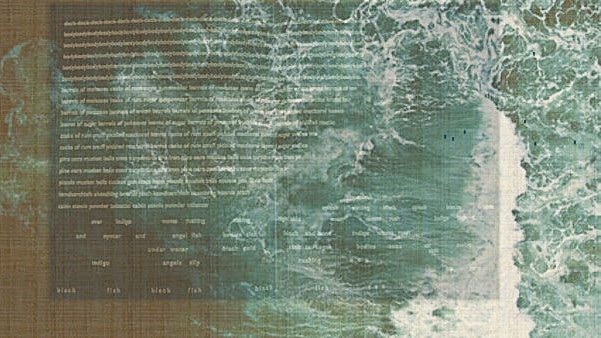
Five poems from the slim chapbook mention her directly. The most affecting one is a concrete poem, ‘cross-section of the schooner phillis’, which makes the outline of a ship with repeated words such as, ‘deck’, ‘body’, ‘molasses’, ‘casks of rum’ and across several lines, ‘bodybodybodybody […]’[50] There are five consecutive lines devoted to the repeated word ‘body’. At the line ends some of the words are broken and only parts of ‘body’ remain in an explicit symbolism of the diseased and dying people thrown overboard from many slave schooners. These lines end ‘b’, ‘bod’, and ‘bo’ and are interrupted by the word ‘over’, again to stress the throwing overboard of those broken bodies.[51] The intrusion of the word ‘over’ is at some remove from the concrete shape of the schooner and so effectively represents the overboard space. However, there is one more interruption to the repeated ‘body’ lines, which appears on the concrete shape of the schooner. Here, the word ‘body’ repeats twenty-four times across one line but the repetition is broken once by the word, ‘girl’.[52] In this poem, Wheatley Peters is reduced to freight, an economic unit akin to sugar, or molasses, for sale. However, Brown does, at least, allow us to identify the poet amongst the anonymous bodies by representing her here as the ‘girl’ of the collection’s title. Contemporary poetry such as Brown’s encourages new readings of Wheatley Peter’s writing and these creative responses to her poetry are compelling.
However, as I have argued here, the poet left her own account of her life before 1773. In accounts like the one I have uncovered in ‘Ode to Neptune’, the poet is no longer reduced to a body in a hold. Rather, she authors Susannah Wooldridge’s, and her own, warm welcome on English soil – soil on which she was, from the moment of arrival, free. She secures this welcome for herself through the studied production and promotion of Poems and in ‘Ode to Neptune’ she extends that welcome to Susannah Wooldridge by imaginatively enabling her safe passage. The waters are not calmed, however, until she has emphasised, to the merchant Thomas Wooldridge and his wife, the horrors and dangers of sea travel from the perspective of a poet who endured the Middle Passage, perhaps alongside her lifelong friend, Obour Tanner, and certainly alongside countless trafficked others.
Notes
[1] Current scholarship appears on Wheatley Peters as ‘Wheatley’, ‘Wheatley (Peters)’, or Wheatley Peters. The editors of the Special Issue on the poet of Early American Literature (2022) outlined how the ‘inconsistency in name usage underscores the complexities of naming practices both in Wheatley’s time and ours.’ For more see, Tara Bynum, et al., ‘Introduction’, Special Issue, ‘“Dear Sister: Phillis Wheatley’s Futures’”, Early American Literature, 57.3 (2022), p. 668. Honorée Fanonne Jeffers makes a compelling case for using the Peters name in Jeffers, The Age of Phillis (Middletown, Connecticut Press: Wesleyan University, 2020). See the essay in this creative/ critical work, ‘Looking for Miss Phillis’ pp. 167-189. Wheatley Peters’s death notice is written for ‘Mrs Phillis Peters (formerly Phillis Wheatley)’ in the Independent Chronicle 9 December 1784. She signs off ‘Elegy to Samuel Cooper’ 1784 ‘Humble Servant, Phillis Peters’, in Vincent Caretta (ed), Phillis Wheatley Complete Writings (Penguin Books: New York and London, 2001) p.99. and a letter to Obour Tanner, Boston May 10, 1779, as ‘your friend & Sister Phillis Peters’ in Phillis Wheatley Complete Writings p.162. For a good account of her final years with John Peters see, Cornelia H. Dayton, ‘Lost Years Recovered: John Peters and Phillis Wheatley Peters in Middleton’, New England Quarterly, 94. 3 (September 2021): 309-351. I’ll be referring to the author of Poems on Various Subjects Religious and Moral (1773) as Wheatley Peters throughout.
[2] For an up-to-date account of the lost second volume and the proposal for that volume see, Michelle Levy, ‘“A Volume of Manuscript Poems & c.”: Phillis Wheatley Peters’s Lost Book and a Found Proposal’, Eighteenth-Century Life (2024) 48 (1): 183–216.
[3] Dana Murphy deals with the significance of the legacies of Poems for Black women’s writing and criticism in, Foremother Love: Phillis Wheatley and Black Feminist Criticism (Durham, NC: Duke University Press, 2025). I’m borrowing the term ‘foremother’ from Murphy.
[4] Phillis Peters, ‘Proposal for Second Collection of Poems’ in Vincent Caretta (ed.), Complete Writings, p.170; for more on the importance of using Wheatley Peters’s married name, see the short provocation on this topic by Zachary McLeod Hutchins, ‘Provocation’ “Add New Glory to Her Name”’, Early American Literature, 56.3, Special Issue: Early American Fictionality (2021): 663-667.
[5] Phillis Peters to Obour Tanner, 10 March 1779, in, Vincent Caretta (ed.), Complete Writings, p.162; ‘Phillis Peters, ‘An Elegy to the Memory of that Great Divine, The Reverend and Learned Dr. Samuel Cooper’ in Vincent Caretta (ed.), Complete Writings, p.99.
[6] An exception to this critical pattern can be found in Don Holmes, ‘Provocation: Diplomatic Negotiations in Phillis Wheatley’s Ambassadorial “On Being Brought from Africa to America”, Early American Literature, Vol. 57, no. 3, (2022), pp. 687-699. Holmes argues for the importance of reading the Middle Passage in this poem.
[7] Christina Sharpe, ‘Black Studies: In the Wake’, The Black Scholar, Vol. 44, No. 2, (Summer 2014), p.61. For more on ‘the hold’ see Christina Sharpe, In the Wake: On Blackness and Being (Duke University Press, 2016) in which chapter 3 is devoted to the slave-ship hold and its legacies.
[8] A good example of an author who repeatedly returns to the Middle Passage and its legacies in the present is Caryl Phillips. See, Phillips, The Lost Child (London: Vintage Books, 2015). Phillips has said that he wishes his ashes to be ‘scattered in the middle of the Atlantic Ocean, at a point equidistant from Britain, North America and the Caribbean, and the West Coast of Africa’ as symbolic of a ‘desire to actively cultivate a plural notion of home’ and to represent his Atlantic world identities. New World Order (London: Vintage Books, 2010), pp.132-133.
[9] Although Lucy Terry (1733-1821) survived the Middle Passage her poem ‘Bars Fight’ (1746) does not allude to her abduction. It was preserved orally from around 1746 before it was published more than a century later in Josiah Gilbert Holland’s History of Wester Massachusetts (1855). Jupiter Hammon survived the same journey and describes it in ‘An Address to Miss Phillis Wheatley’ (1778): ‘God’s tender mercy brought thee here; / Tost o’er the raging main’. There are several narratives from enslaved people’s perspectives of the hold including, Olaudah Equiano, The Interesting Narrative of the Life of Olaudah Equiano (1789); Ottobah Cugoano, Thoughts and Sentiments on the Evil of Slavery (1787); Venture Smith, A Narrative of the Life and Adventures of Venture, A Native of Africa (1798).
[10] For example, George Moses Horton (1797-1883) wrote The Hope of Liberty (1829) while enslaved in North Carolina and that collection deals with his experiences of slavery in the South. But, it includes poems such as ‘The Slave’s Complaint’ that includes seafaring metaphors and imagery that recall the Middle Passage and its legacies, especially in the opening of the poem, ‘Am I sadly cast aside,/ On misfortune’s rugged tide?’. Horton, ‘The Slave’s Complaint’, (lines 1-2), The Hope of Liberty in Sherman, Joan R. (ed.) The Black Bard of North Carolina: George Moses Horton and His Poetry (Chapel Hill: The University of North Carolina Press, 2000) p. 79. The best-known reimagining from the twentieth century can be located in Robert Hayden’s ‘Middle Passage’ (1945): ‘Sails flashing to the wind like weapons, / sharks following the moans the fever and the dying;/ horror the corposant and compass rose./ Middle Passage: / voyage through death / to life upon these shores.’ https://www.poetryfoundation.org/poems/43076/middle-passage (accessed 5 December 2025) (lines 2-7). A good example from contemporary Black poetry of counter memory to examine the lasting trauma of the Middle Passage is M. NourbeSe Philip’s ‘Zong!’ (Toronto: The Mercury Press, 2008) which deals with the massacre on the slave ship Zong on 29 November 1781, that Wheatley Peters would have read about in the news. A good critical account of where the slave trade was repeatedly imagined as memory and history in nineteenth- and twentieth century Black poetry is Raphael Lambert’s ‘The Slave Trade as Memory and History: James A. Emanuel’s “The Middle Passage Blues” and Robert Hayden’s “Middle Passage”’, African American Review, 47.2/3 (Summer/ Fall 2014): 27-338.
[11] Susanna Wheatley to the Countess of Huntingdon, 30 April 1773, in Sarah Dunlap Jackson, ‘Letters of Phillis Wheatley and Susanna Wheatley’, The Journal of Negro History, 57. 2 (April 1972), p. 214.
[12] Phillis Wheatley, ‘Phillis Wheatley to the Countess of Huntingdon’, 25 October 1770, in Phillis Wheatley Complete Writings, p.139.
[13] Eric D. Lamore, ‘Phillis Wheatley’s Use of the Georgic’, in John C. Shields and Eric D. Lamore (eds.), New Essays on Phillis Wheatley (Knoxville: The University of Tennessee Press, 2011) p.112.
[14] Leon Jackson, ‘The Talking Book and the Talking Book Historian: African American Cultures of Print – The State of the Discipline’, Book History, Vol. 13 (2010) p. 274.
[15] Thomas Jefferson qtd in John C. Shields, Phillis Wheatley’s Poetics of Liberation: Backgrounds and Contexts (Knoxville: The University of Tennessee Press, 2008) p. 2.
[16] Henry Louis Gates Jr., Figures in Black: Words, Signs, and the ‘Racial Self’ (New York and Oxford: Oxford University Press, 1989) p. 43.
[17] A powerful articulation of the incongruity of Wheatley Peters’s life and work is found in June Jordan’s creative/critical response. Jordan writes about the impossibility that Wheatley Peters might create herself a poet from the place of her dehumanized slave experience: ‘how could you dare to create yourself: A poet? A poet can read. A poet can write. A poet is African in Africa, or Irish in Ireland, or French on the Left Bank of Paris, or white in Wisconsin. A Poet writes in her own language. A poet writes of her own people, her own history, her own vision, her own room, her own house where she sits at her own table quietly placing one word after another word until she builds a line and a movement and an image and a meaning that somersaults all of these into the singing, the absolutely individual voice of the poet: At liberty. A poet is somebody free. A poet is someone at home. How should there be Black poets in America? It was not natural.’ Jordan, ‘The Difficult Miracle of Black Poetry in America or Something like a Sonnet for Phillis Wheatley’, The Massachusetts Review, 27.2 (Summer, 1986), p.252; The Phillis Wheatley Festival was established in 1973 at Jackson State University by the poet, Margaret Walker. For more on this see, Kristen Lee, ‘“Sister, Wasn’t It Good”: Archival Gestures, Mutual Witness, and the 1973 Phillis Wheatley Poetry Festival’, Early American Literature, 57.3 (2022): 857-871.
[18] Henry Louis Gates Jr. has argued that Wheatley Peters was ‘Too black to be taken seriously by white critics in the eighteenth century, [and] now considered too white to interest black critics in the twentieth’, she lost critical favour in both ages. See, Gates, The Trials of Phillis Wheatley (New York: Basic Civitas Books, 2003), p. 81; For an overview of the critical response that I am outlining here see R. Lynn Matson, ‘Phillis Wheatley – Soul Sister?’, Phylon Vol. 33, No. 3 (1972): 222-230.
[19] LeRoi Jones (Amiri Baraka), Home: Social Essays (William Morrow and Company, 1966), n/p.; Eleanor Smith, ‘Phillis Wheatley: A Black Perspective’, The Journal of Negro Education, 43.3 (Summer, 1974), p. 403.
[20] Vincent Caretta, Phillis Wheatley: Biography of a Genius in Bondage (University of Georgia Press, 2011); John C. Shields et al. (eds) New Essays on Phillis Wheatley (Knoxville: University of Tennessee Press, 2011): John C. Shields, Phillis Wheatley and the Romantics (Knoxville: The University of Tennessee Press, 2010); John C. Shields, Wheatley’s Poetics of Liberation: Backgrounds and Contexts (Knoxville: University of Tennessee Press, 2008); Betsy Erkkila, ‘Phillis Wheatley and the Black American Revolution,’ in A Mixed Race: Ethnicity in Early America, Frank Shuffelton (ed.), (New York: Oxford University Press, 1993).
[21] Joel Pace, ‘Afterthoughts: Romanticism, the Black Atlantic, and Self-Mapping’, Studies in Romanticism 56.1 (2017) p.121; Joseph Rezek, writing on the history of print culture, describes an ‘essentializing phase’ when one book could appear to represent an entire race of people. When Wheatley Peters is reduced to a symbol, to represent the beginning of Black writing from 1773, that is a good example of this essentializing phase and it distracts from making fuller readings of the poems. See Resek, ‘The Racialization of Print’ American Literary History 32.3 (2020): 417–445.
[22] James Edward Ford III lists the abolitionist readers of Wheatley Peters as William Lloyd Garrison, Lydia Maria Child, David Walker, and James McCune Smith’ and writes that it is ‘not possible’ that they ‘simply mistook Wheatley the turncoat for an ally.’ For more, see Ford, ‘The Difficult Miracle: Reading Phillis Wheatley against the Master’s Discourse’, The New Centennial Review, 18.3 (Winter 2018), p.187.
[23] William H. A. Moore, ‘National Capital Topics. New Young Men’s Christian Association – Bethel Literary Announcements’ New York Age (16 Jan. 1892) African American Newspapers, https://infoweb.newsbank.com. (Last accessed 6 January 2026), p. 4.
[24] Jennifer Rene Young, ‘Marketing a Sable Race’, John C. Shields and Eric D. Lamore (eds.), New Essays on Phillis Wheatley (Knoxville: The University of Tennessee Press, 2011) p. 227.
[25] Young ‘Marketing a Sable Muse’ p.227, 238.
[26] Julia Griffiths writes to Douglass giving an account of her journey and noting her departure date as 18 June 1855. In this vivid letter Griffiths recounts seeing porpoises in abundance as they sailed past Newfoundland, she wishes she had Charles Dickens on board to sketch some absurd characters including a vocally racist doctor, and recounts a conversation on board with a ‘Louisiana Gentleman’, a slaveowner, to whom she declares with pride that Frederick Douglass is her ‘intimate friend’ and a fact (of the brutal realities of slavery) ‘undeniable’. It is a lively letter, typical of Griffiths’s engaging style, and it provides an excellent snapshot of the cultural/historical moment. See ‘Julia Griffiths to Frederick Douglass July 2, 1855’, Correspondence, Volume 2: 1853-1865, https://frederickdouglasspapersproject.com/item/16539 (Last accessed 14 January 2026).
[27] W. E. B. Du Bois famously writes of his dawning realisation as a child at school that he was ‘different from the others’ and ‘shut out from their world by a vast veil’. For more see, W. E. B. Du Bois, The Souls of Black Folk ed. Brent Hayes Edwards (Oxford: Oxford University Press, [1903] 2007), p. 43.
[28] Phillis Wheatley, ‘On Being Brought from Africa to America’, Phillis Wheatley Complete Writings, (lines 7-8), p. 13.
[29] Wheatley, ‘On Being Brought from Africa to America’, (line 1), p.13.
[30] Wheatley, ‘An Hymn to Humanity’, Phillis Wheatley Complete Writings, (line 31), p. 51.
[31] Waldstreicher, The Odyssey of Phillis Wheatley, p. 176.
[32] The poem was then printed in the New-York Journal alongside her letter to Lord Dartmouth of 10 October 1772.
[33] Phillis Wheatley, ‘To the Right Honourable Earl of Dartmouth’, Poems on Various Subjects, Religious and Moral [1773], in Phillis Wheatley: Complete Writings, Vincent Caretta, ed., (Penguin Books: New York and London, 2001) (lines 20-31), p.40.
[34] Dartmouth and Selina Hastings were friends and so the Wooldridge connection brought Wheatley Peters to the attention of powerful people on both sides of the Atlantic. Waldstreicher notices similarities between ‘To the Right Honourable Earl of Dartmouth’ and ‘Ode to Neptune’. For a reading of those poems together see, The Odyssey of Phillis Wheatley, p.176.
[35] Phillis Wheatley, ‘To the Earl of Dartmouth (October 10, 1772)’ in Phillis Wheatley: Complete Writings, Vincent Caretta, ed., (Penguin Books: New York and London, 2001) p.14
[36] Until recently we have used Margaretta Matilda Odell’s, Memoir and Poems of Phillis Wheatley, A Native African and a Slave. Dedicated to the Friends of the Africans (Boston: George W. Light, 1834). Jeffers has disputed the validity of this memoir in The Age of Phillis pp. 167-189.
[37] Wheatley, ‘Ode to Neptune’, Phillis Wheatley Complete Writings, (lines 1, 2), p. 41.
[38] Wheatley, ‘Ode to Neptune’, (lines 7-12), p. 41.
[39] Ibid., (line 14).
[40] Ibid., (line 17).
[41] ‘Timothy Fitch to Peter Gwinn, Jan 12 1760’, Slave Trade Letters Collection, Medford Historical Society & Museum, https://www.medfordhistorical.org/collections/slave-trade-letters (Last accessed 1 December 2025).
[42] Waldstreicher, The Odyssey of Phillis Wheatley, p. 14.
[43] Wheatley, ‘Ode to Neptune’, Phillis Wheatley Complete Writings, (lines 1-6), p. 41.
[44] Wheatley, ‘Ode to Neptune’, Phillis Wheatley Complete Writings, (lines 13-18), p. 41.
[45] Phillis Wheatley Peters to Obour Tanner, Boston October 30, 1773, Phillis Wheatley Complete Writings p.148.
[46] For a full account of this landmark case and its implications, read, Patricia Hagler Minter, ‘“The State of Slavery”: Somerset, The Slave, Grace, and the Rise of Pro-Slavery and Anti-Slavery Constitutionalism in the Nineteenth-Century Atlantic World’, Slavery & Abolition, 36.4 (2015): 603-617. She did return, cutting her trip short, and missing out on an appointment with the King, to care for the ailing Susanna Wheatley.
[47] Christiana Sharpe, In the Wake: On Blackness and Being (Duke University Press, 2016), p. 49. Sharpe is quoting from June Jordan, ‘The Difficult Miracle of Black Poetry in America or Something like a Sonnet for Phillis Wheatley’, p.253.
[48] Evie Shockley, ‘Ode to E’, A Half-Red Sea (Carolina: Wren Press Poetry, 2006), p.47.
[49] Tara Bynum, Reading Pleasures: Everyday Black Living in Early America (Illinois: University of Illinois Press, 2023); David Waldstreicher has argued that Obour Tanner and Wheatley Peters travelled together to Boston on The Phillis. See, Waldstreicher, The Odyssey of Phillis Wheatley, p. 11.
[50] Drea Brown, ‘cross-section of the schooner phillis’, Dear Girl: A Reckoning (Gold Line Press, 2015), (line 9); (lines 3-8), pp.17-19. The other poems from the collection that reference Wheatley Peters are: ‘bop: passage in simile’ p.23, ‘mercy visits the schooner phillis’ p.31, ‘girl on the deck of terror and wonder’ p.35, and ‘phillis land ho!’ p.37.
[51] Brown, ‘cross-section of the schooner phillis’ (lines 5, 7, 8), pp.17-19.
[52] Brown, ‘cross-section of the schooner phillis’ (line 5), pp.17-19.
Works Cited
Anon. ‘Phillis Peters’s Death Notice’, Independent Chronicle 9 December 1784.
Anon., Slave Trade Letters Collection, Medford Historical Society & Museum, https://www.medfordhistorical.org/collections/slave-trade-letters.
Brown, Drea. Dear Girl: A Reckoning (Gold Line Press, 2015).
Bynam, Tara et al. ‘“Dear Sister: Phillis Wheatley’s Futures’”, Early American Literature, 57.3, Special Issue (2022): 663-680.
Bynum, Tara. Reading Pleasures: Everyday Black Living in Early America (Illinois: University of Illinois Press, 2023).
Caretta, Vincent, Phillis Wheatley Peters: Biography of a Genius in Bondage, Second Edition (University of Georgia Press, 2023).
Caretta, Vincent, Phillis Wheatley: Biography of a Genius in Bondage (University of Georgia Press, 2011).
Cugoano, Ottobah. Thoughts and Sentiments on the Evil of Slavery (1787), Empire Online, empire.amdigital.co.uk. (Accessed 15 January 2026).
Dayton, Cornelia H. ‘Lost Years Recovered: John Peters and Phillis Wheatley Peters in Middleton’, New England Quarterly, 94. 3 (September 2021): 309-351.
Du Bois, W. E. B. The Souls of Black Folk ed. Brent Hayes Edwards (Oxford: Oxford University Press, [1903] 2007).
Equiano, Olaudah. The Interesting Narrative of the Life of Olaudah Equiano, or Gustavus Vassa, the African. Written by himself 6th ed (G. G. J. & J. Robinson, Paternoster-Row; and by Charles Stalker, Stationers-Court, Ludgate-Street, London, [1793]) Eighteenth Century Collections Online, link.gale.com/apps/doc/CW0102373283/ECCO?u=unn&sid=bookmark-ECCO&xid=be86aaf7&pg=1. (Accessed 20 January 2026).
Erkkila, Betsy, ‘Phillis Wheatley and the Black American Revolution,’ in A Mixed Race: Ethnicity in Early America, Frank Shuffelton (ed.), (New York: Oxford University Press, 1993) pp. 225-240.
Ford III, James Edward. ‘The Difficult Miracle: Reading Phillis Wheatley against the Master’s Discourse, The New Centennial Review, 18.3 (Winter 2018): 181-224.
Gates Jr., Henry Louis. Figures in Black: Words, Signs, and the ‘Racial Self’ (New York and Oxford: Oxford University Press, 1989).
Gates Jr., Henry Louis. The Trials of Phillis Wheatley (New York: Basic Civitas Books, 2003).
Griffiths, Julia. ‘Julia Griffiths to Frederick Douglass July 2, 1855’, Correspondence, Volume 2: 1853-1865, https://frederickdouglasspapersproject.com/item/16539.(Accessed 20 December 2025).
Hammon, Jupiter. ‘An Address to Miss Phillis Wheatly’ [1778], https://www.poetryfoundation.org/poems/52546/an-address-to-miss-phillis-wheatly (Accessed 15 January 2026).
Hayden, Robert ‘Middle Passage’ (1945): https://www.poetryfoundation.org/poems/43076/middle-passage. (Accessed 10 December 2023).
Holmes, Don. 2022. ‘Provocation: Diplomatic Negotiations in Phillis Wheatley’s Ambassadorial “On Being Brought from Africa to America.” Early American Literature 57 (3): (2022), pp. 687-699.
Horton, George Moses. The Hope of Liberty in Sherman, Joan R. (ed.) The Black Bard of North Carolina: George Moses Horton and His Poetry (Chapel Hill: The University of North Carolina Press, 2000).
Hutchins, Zachary Mcleod. 2021. ‘Provocation: “Add New Glory to Her Name” Phillis Wheatley Peters.’ Early American Literature 56 (3): 663–67.
Isani, Muktar Ali. ‘Wheatley’s Departure for London and Her “Farewell to America”, South Atlantic Bulletin, Vol. 42, No. 4 (November 1977): 123-129.
Jackson, Sarah Dunlap. ‘Letters of Phillis Wheatley and Susanna Wheatley’, The Journal of Negro History, 57. 2 (April 1972): 211-215.
Jackson, Leon. ‘The Talking Book and the Talking Book Historian: African American Cultures of Print’, Book History, Vol. 13 (2010): 251- 308.
Jeffers, Honorée Fanonne. The Age of Phillis (Middletown, Connecticut Press: Wesleyan University, 2020).
Jones, LeRoi (Amiri Baraka). Home: Social Essays (William Morrow and Company, 1966).
Jordan, June. ‘The Difficult Miracle of Black Poetry in America or Something like a Sonnet for Phillis Wheatley’, The Massachusetts Review, 27.2 (Summer, 1986): 252-262.
Lambert, Raphael. ‘The Slave Trade as Memory and History: James A. Emanuel’s “The Middle Passage Blues” and Robert Hayden’s “Middle Passage”’, African American Review, 47.2/3 (Summer/ Fall 2014): 27-338.
Lamore, Eric D. ‘Phillis Wheatley’s Use of the Georgic’ in John C Shields and Eric D. Lamore (eds.), New Essays on Phillis Wheatley (Knoxville: The University of Tennessee Press, 2011).
Lee, Kristen. ‘“Sister, Wasn’t It Good”: Archival Gestures, Mutual Witness, and the 1973 Phillis Wheatley Poetry Festival’, Early American Literature, 57.3 (2022): 857-871.
Levy, Michelle. 2024. ‘“A Volume of Manuscript Poems &c”: Phillis Wheatley Peters’s Lost Book and a Found Proposal’, Eighteenth-Century Life 48 (1): 183–216.Matson, R. Lynn. ‘Phillis Wheatley – Soul Sister?’, Phylon 33.3 (1972): 222-230.
Minter, Patricia Hagler. ‘“The State of Slavery”: Somerset, The Slave, Grace, and the Rise of Pro-Slavery and Anti-Slavery Constitutionalism in the Nineteenth-Century Atlantic World’, Slavery & Abolition, 36.4 (2015): 603-617.
Moore, William H. A. ‘National Capital Topics. New Young Men’s Christian Association – Bethel Literary Announcements’ New York Age (16 Jan. 1892) African American Newspapers, https://infoweb.newsbank.com.
Murphy, Dana. Foremother Love: Phillis Wheatley and Black Feminist Criticism (Durham, NC: Duke University Press, 2025).
Odell, Margaretta Matilda. Memoir and Poems of Phillis Wheatley, A Native African and a Slave. Dedicated to the Friends of the Africans (Boston: George W. Light, 1834).
Pace, Joel. ‘Afterthoughts: Romanticism, the Black Atlantic, and Self-Mapping’, Studies in Romanticism 56.1 (2017): 113-123.
Philip, M. NourbeSe ‘Zong!’ (Toronto: The Mercury Press, 2008).
Phillips, Caryl. The Lost Child (London: Vintage Books, 2015).
Phillips, Caryl. New World Order (London: Vintage Books, 2010).
Rezek, Joseph. ‘The Racialization of Print’ American Literary History 32.3 (2020): 417–445.
Robbins, Sarah Ruffing et al. The Genius of Phillis Wheatley Peters: A Poet and Her Legacies, https://wheatleypetersproject.weebly.com/teaching-resources.html.
Sharpe, Christina. ‘Black Studies: In the Wake’, The Black Scholar, 44.2 (Summer 2014): 59-69.
Sharpe, Christina. In the Wake: On Blackness and Being (Duke University Press, 2016).
Shields, John C. Phillis Wheatley’s Poetics of Liberation: Backgrounds and Contexts (Knoxville: The University of Tennessee Press, 2008).
Shields, John C., et al. (eds.), New Essays on Phillis Wheatley (Knoxville: University of Tennessee Press, 2011).
Shields, John C., Phillis Wheatley and the Romantics (Knoxville: The University of Tennessee Press, 2010).
Shockley, Evie. A Half-Red Sea (Carolina: Wren Press Poetry, 2006).
Smith, Eleanor. ‘Phillis Wheatley: A Black Perspective’, The Journal of Negro Education, 43.3 (Summer, 1974): 401-407.
Smith, Venture. A Narrative of the Life and Adventures of Venture, A Native of Africa (1798), Eighteenth Century Collections Online. https://link.gale.com/apps/doc/CB0127640224/ECCO?u=unn&sid=bookmark-ECCO&xid=de30a04b&pg=1. (Accessed 12 January 2026).
Terry, Lucy. ‘Bars Fight’ [1746] in Henry Louis Gates Jr. and Nellie Y. McKay (eds.), The Norton Anthology of African American Literature (W.W. Norton & Company, 1997).
Waldstreicher, David. The Odyssey of Phillis Wheatley: A Poet’s Journeys through American Slavery and Independence (Farrar, Straus and Giroux, 2023).
Wheatley, Phillis. Poems on Various Subjects, Religious and Moral [1773] in Vincent Caretta (ed). Phillis Wheatley Complete Writings (Penguin Books: New York and London, 2001).
Young, Jennifer Rene. ‘Marketing a Sable Race’, John C. Shields and Eric D. Lamore (eds.), New Essays on Phillis Wheatley (Knoxville: The University of Tennessee Press, 2011).


